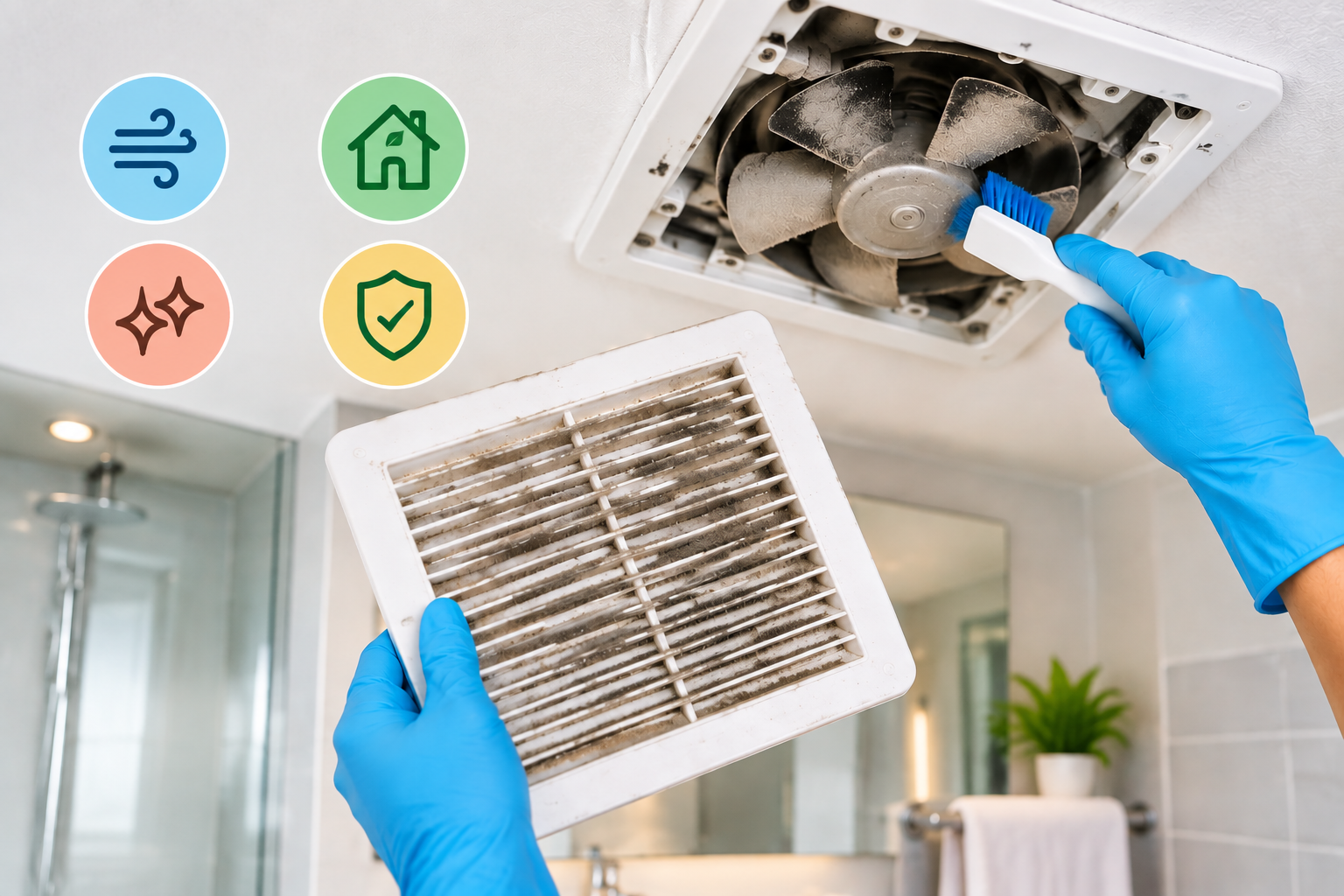
A bathroom exhaust fan is important in keeping the home healthy and comfortable. It eliminates moisture, odors, and airborne particles and helps to prevent the growth of mold and mildew. But with time, dust, dirt, and grime may accumulate on the fan cover, blades, and internal parts, diminishing its performance.
Cleaning a bathroom exhaust fan is a relatively easy maintenance procedure that can enhance air flow, lessen noise, and increase the life span of your ventilation system. Using only a small set of tools and the appropriate cleaning technique, you can easily clean and maintain your bathroom exhaust fan so it stays in good condition.
Why Cleaning Your Bathroom Exhaust Fan Is Important
Bathroom exhaust fans continuously draw humid air, dust, and tiny particles into their vents. A clogged fan must work harder to move air; this may result in lower efficiency and increased energy consumption.
A dirty exhaust fan may also create unpleasant issues, including:
- Poor ventilation and weak airflow
- Increased moisture buildup
- Growth of mold and mildew
- Excessive fan noise
- Shortened fan lifespan
Cleaning your bathroom exhaust fan regularly will help to keep the indoor air quality better. so your ventilation system will continue protecting your bathroom against moisture-related damage.
How Often Should You Clean a Bathroom Exhaust Fan?
Bathroom exhaust fans are supposed to be cleaned at least once every six months. But the best cleaning routine is determined by the frequency of the bathroom usage and the dust quantity in your house.
You may need to clean your exhaust fan more frequently if:
- The bathroom is used by more than one individual
- There is poor ventilation in the bathroom
- There is a lot of dust in your house
- You experience decreased airflow
- The fan cover is dirty or discolored
Frequent cleaning simplifies the cleaning process since dust and grime lack sufficient time to accumulate in thick layers.
Tools and Supplies You Need for Cleaning
Prepare the supplies beforehand to ensure that the process is fast and safe.
You will normally require:
- A screwdriver
- A vacuum cleaner that has a brush attachment
- A microfiber cloth
- Warm water
- Mild dish soap
- An old toothbrush or soft brush
- A dry towel
Do not apply tough chemical cleaners, which may destroy plastic covers or electrical parts within the fan.
Step-by-Step Guide to Clean a Bathroom Exhaust Fan
To clean a bathroom exhaust fan, you do not need professional skills, but it is necessary to take the right steps to prevent damaging the device.
Turn Off the Power Before Cleaning
First, switch off the power to the bathroom exhaust fan at the wall switch and, as an additional precaution, switch off the circuit breaker to the fan.
Do not wash the fan when it is in contact with electricity. The presence of even a little moisture around electrical components can pose a safety risk.
Remove the Exhaust Fan Cover
Most bathroom exhaust fan covers can be removed easily. Slowly draw the cover down. Many models have spring clips that can be squeezed to unlock the cover.
If you have screws to hold your fan cover, take them out with a screwdriver. Keep the screws in a secure place to avoid losing them. After removing, check the cover for dust, stains, or accumulation.
Wash and Clean the Fan Cover
The fan cover gathers a lot of dust as it is the initial surface that receives the airborne particles.
Put the cover in warm water with light dish soap. Soak it a few minutes then wipe it down with a soft brush or microfiber cloth.
Note small holes where dust may be trapped. Wipe the cover and dry it completely before replacing it.
Remove Dust from the Fan Blades and Motor Area
Once the cover is removed, you will be able to reach the fan blades and the surrounding area. Clean with a brush vacuum cleaner to get rid of dust and debris.
Be gentle when cleaning around the fan motor. Avoid pulling on wires or applying too much pressure to internal components.
To remove hard-to-clean grime, a damp microfiber cloth can be used to wipe the blades and housing. Ensure that no water gets into the motor or electrical contacts.
Clean the Vent Opening and Surrounding Area
Dust tends to accumulate on the edges of the exhaust fan opening and ceiling space. Clean the surrounding surface using a clean, wet cloth to get rid of dirt accumulation.
This will enhance the general look of your bathroom, and dust will not settle on the fan easily.
How To Maintain a Cleaner Bathroom Exhaust Fan
Between deep cleanings, it is a good idea to keep your exhaust fan clean to maximize performance and minimize maintenance time.
Use these tips:
- Turn on the fan when taking showers and afterwards to dry
- Clean bathrooms of excessive dust
- Test the fan periodically if you detect suspicious noises
- Change damaged or worn fan covers
- Avoid blocking the ventilation area
If your bathroom exhaust fan is still making noises, its suction is weak, or it is not able to remove moisture after cleaning, then it might require repair or replacement.
Common Mistakes to Avoid When Cleaning an Exhaust Fan
Many homeowners accidentally damage their bathroom exhaust fans by using incorrect cleaning methods.
Avoid these common mistakes:
Excessive use of water: Water may ruin electrical components. Clean internal areas with a lightly wet or damp cloth.
Washing without switching off power: Ensure that you switch off power first, for safety, and then wash the fan or cover.
Application of harsh chemicals: Strong cleaners can discolor the plastic parts or weaken the materials with time.
Neglecting routine cleaning: Leaving it years between cleanings can complicate the removal of dust and decrease the efficiency of fans.
When To Consider Professional Exhaust Fan Cleaning
Simple cleaning of the exhaust fan in the bathroom is normally an easy DIY job. Nonetheless, it can be a good idea to seek professional assistance when the fan has accumulated a lot of debris, is electrically malfunctioning, or has ventilation problems.
A professional HVAC technician can inspect the entire ventilation system, clean hard-to-reach areas, and identify problems affecting airflow. Professional cleaning may also be recommended if your bathroom has persistent humidity problems, mold growth, or poor ventilation despite regular fan use.