Mold proliferation is a typical issue in residential, work, and business structures, particularly in places where moisture, humidity, or water damages occur. Although small quantities of mold might not be a problem, uncontrolled growth can be destructive to property and can lead to an unhealthy indoor environment.
Effective cleaning up of molds has to be planned well, the techniques used to be appropriate, and preventive measures put in place to ensure that the molds do not reoccur.
This guide explains important mold clean up guidelines and recommendations to help homeowners and property managers safely remove mold and maintain a cleaner, healthier space.
Understanding Mold and Why Cleanup Is Important
Mold is a fungus that develops in damp and poorly ventilated conditions. It is transmitted by minute airborne spores that may be deposited on various surfaces, such as walls, ceilings, carpets, furniture, and wood materials.
Mold usually grows as a result of:
- Leaks of water in pipes or roofs
- Water or flood damage
- Excessive humidity indoors
- Poor ventilation
- Condensation buildup
- Wet building materials.
The neglect of mold issues may result in the unpleasant smell, destruction of property, and possible indoor air quality issues. Properly cleaning up the molds can be used to preserve the building structure and minimize the possibility of future molds.
Important Guidelines Before Starting Mold Cleanup
It is necessary to evaluate the situation and observe the necessary safety measures before getting rid of mold. Hurrying to clean without planning may cause the spread of the mold spores to other parts of the house.
Identify the Source of Moisture
The initial process in cleaning up of the molds is to locate and remedy the source of moisture. Without moisture, no mold can develop, and it is necessary to eliminate the water issue.
Check for:
- Plumbing leaks
- Roof damage
- Wet insulation
- Basement moisture
- HVAC system issues
- Excess humidity.
Unless the moisture problem is fixed, it is probable that the mold will reoccur despite cleaning.
Assess the Size of the Mold Problem
Small spots of molds can be treated with the help of appropriate cleaning procedures, whereas bigger ones can be treated with professional help.
Consider professional mold remediation if:
- Mold covers a large area
- Mold is within walls or ventilators
- There has been extensive water damage
- The cause of mold is unknown
- People in the building are sensitive to exposure to molds.
An appropriate evaluation can be used to identify the most efficient and safe cleanup method.
Safety Recommendations for Mold Cleanup
The air duct cleaning of molds must be done in a safe manner. Troubling mold may spread the spores to the air, exposing people to greater risks.
Wear Proper Protective Equipment
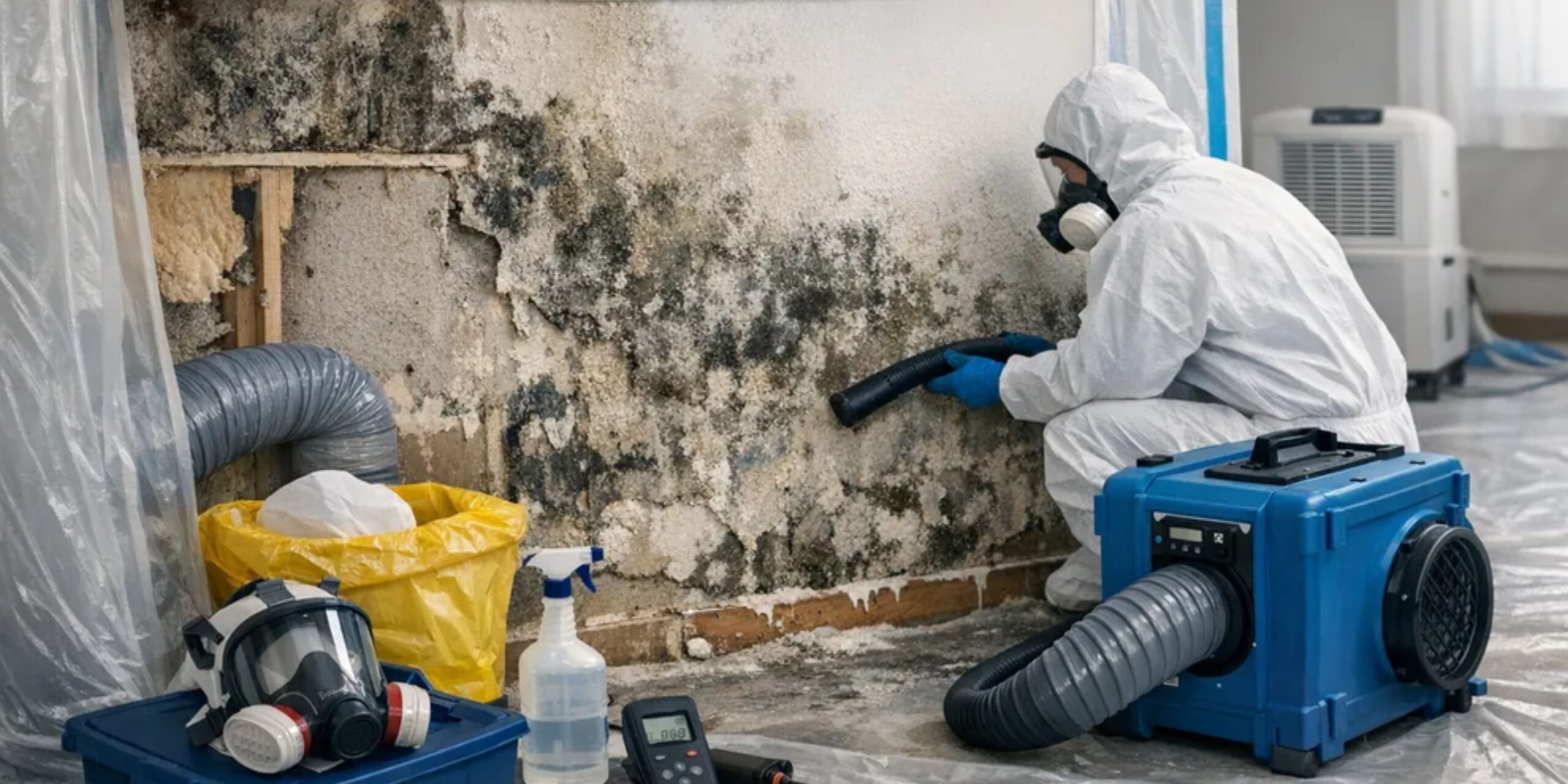
Before beginning cleanup, wear appropriate protective gear, including:
- N-95 or better-quality respirator masks
- Protective skin gloves
- Safety goggles
- Protective clothing and long sleeves.
Avoid touching mold directly with bare hands, as contact can cause skin irritation.
Improve Air Circulation Carefully
During cleanup, ventilation is essential; however, inappropriate airflow may disseminate the spores of molds all over the building.
Recommended practices include:
- Open windows when appropriate
- Direct air outside with fans
- Seal off affected areas when necessary
- Do not blow air in contaminated locations to clean spaces.
It is aimed at eliminating polluted air, without dispersing mold particles.
Step-by-Step Mold Cleanup Process
The results can be enhanced by a systematic cleanup process that would minimize the possibility of mold reappearing.
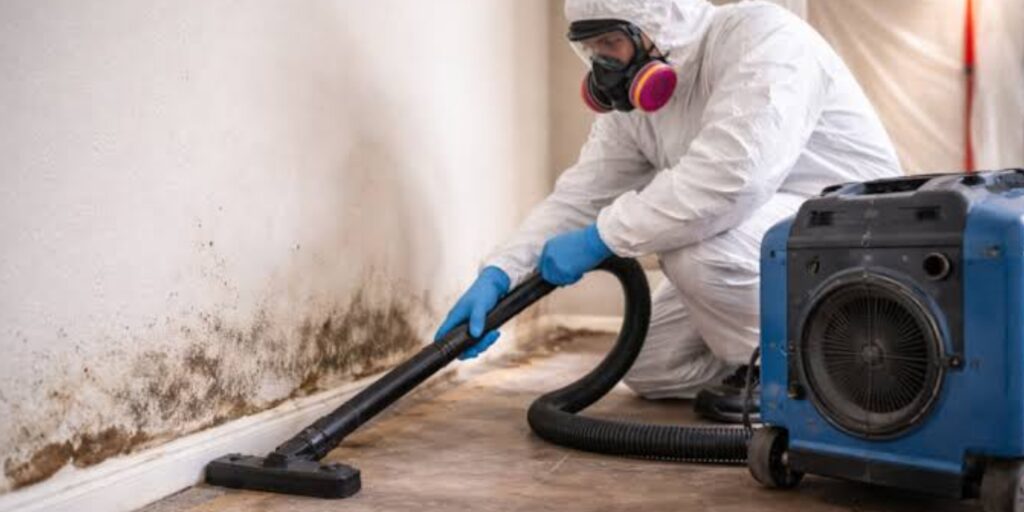
Step 1: Remove Contaminated Materials
Certain materials that have a lot of mold growth cannot be cleaned and may require replacement.
Some of the materials that are usually removed are:
- Damaged drywall
- Moldy insulation
- Severely affected carpets
- Water-damaged ceiling tiles
- Porous furniture.
Put away materials in sealed bags and then transport them through clean places.
Step 2: Clean Mold From Hard Surfaces
Proper methods can often be used to clean hard non porous surfaces.
An example of surfaces that can be cleaned is:
- Tile
- Glass
- Metal
- Plastic
- Sealed wood.
Apply proper cleaning agents and rub affected parts. Always follow product instructions and avoid mixing cleaning chemicals.
Step 3: Dry the Area Completely
Drying is one of the most significant processes after cleaning. Any remaining moisture will provide the environment in which mold can develop once again.
Use:
- Dehumidifiers
- Fans
- Air conditioning systems
- Proper ventilation.
Ensure that surfaces which have been cleaned are thoroughly dry before repairing or replacing materials.
Recommended Mold Prevention Practices
It is cheaper and easier to prevent the growth of mold than to cope with repeated infestations. Mold risks can be greatly minimized through regular maintenance.
Control Indoor Humidity Levels
Maintain indoor humidity levels at a comfortable range by using:
- Damp area dehumidifiers.
- Kitchen and bathroom exhaust fans
- Air conditioners during humid weather
- Proper ventilation systems.
A hygrometer can be used to monitor the level of moisture and early detect issues.
Repair Water Problems Quickly
Even minor leaks may cause significant problems with molds. Solve water related issues when they arise.
Regularly inspect:
- Plumbing connections
- Roof areas
- Windows and doors
- Basements and crawl spaces
- HVAC equipment.
Rapid repairs eliminate the possibility of moisture being a permanent mold issue.
Keep Areas Clean and Dry
Mold can be avoided through regular cleaning and maintenance.
Helpful habits include:
- Wet areas should be dried up.
- Cleaning spills quickly.
- Maintaining storage areas in order.
- Enabling air to move around furniture.
- Preventing too much moisture indoors.
When to Hire Professional Mold Cleanup Services
Although minor cases of molds can be managed by property owners, serious cases might require professional mold remediation.
Professional mold specialists have specialized equipment and training to:
- Find concealed mold growth
- Contain contaminated areas
- Remove mold safely
- Enhance indoor air quality
- Prevent future mold problems.
Professionals should be hired particularly following significant flooding, excessive water damage, or widespread molds.
Common Mold Cleanup Mistakes to Avoid
Mold cleanup can be safer and more effective by avoiding common mistakes.
Do Not Ignore Small Mold Problems
Even tiny spots of mold may easily multiply in case moisture conditions are not eliminated. Treat the growth of molds immediately.
Do Not Paint Over Mold
Covering up the mold does not eliminate the issue. Mold may persist under paint and destroy surfaces in the long run.
Do Not Use Improper Cleaning Methods
Incorrect cleaning techniques may spread mold spores instead of removing them. Wear protective equipment and recommended procedures.